
All articles5 minute read
Clear garbage bags, and where else to look
Things keep going in the trash and nobody knows why. One change to what you buy makes them findable again, and the rest of this is where they actually turn up.
Her pills. His hearing aid. The bank letter you needed on Thursday. The remote, twice.
It arrives without warning and usually without any memory of it afterwards, which means asking what happened to it is a question nobody in the room can answer.
The first part of this is one small thing that makes the bin searchable. The second part is everywhere else to look, because the bin is not where most of it ends up.
Buy clear ones
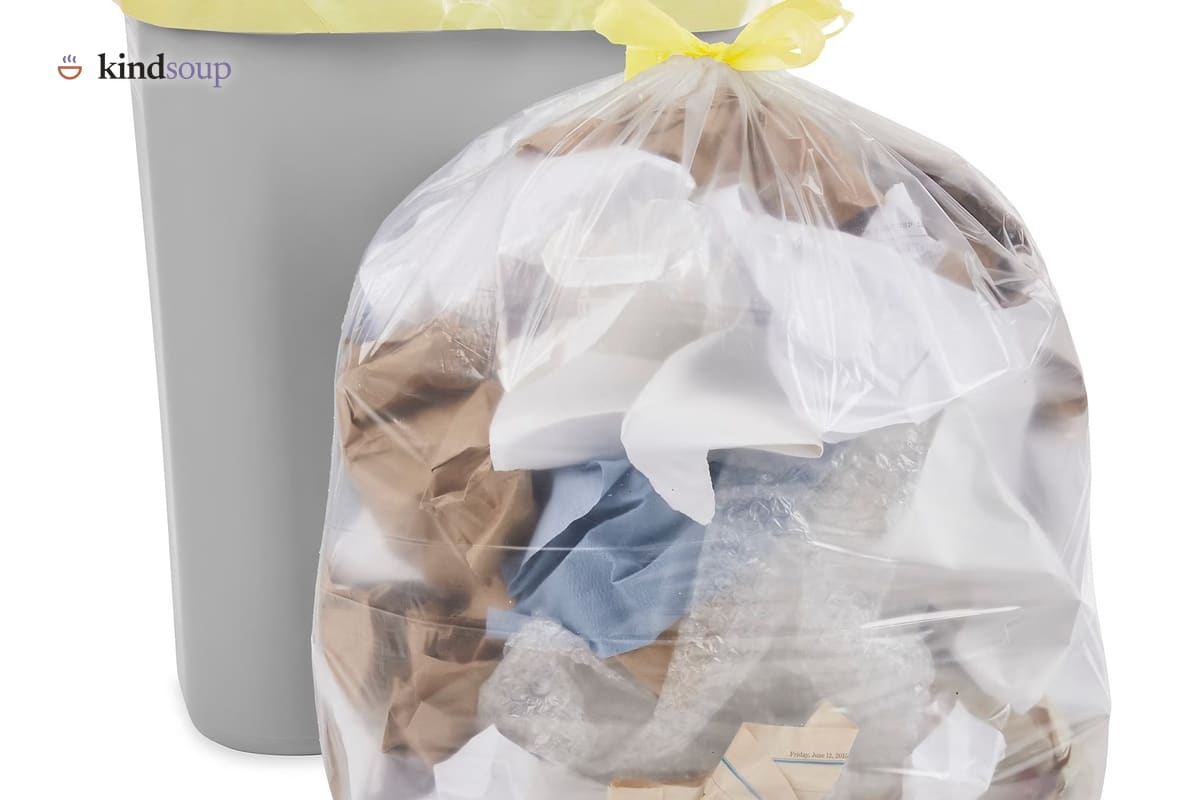
Clear garbage bags instead of black. Four dollars for a roll, in any hardware store, and it is the highest ratio of relief to effort on this whole site.
Two things change at once. You can see what is in a bag without opening it or tipping it out, so checking takes four seconds at the door rather than being a job you put off. And if the bag has already gone out, yours is identifiable in a communal dumpster without opening everybody else’s.
That second one matters more than it sounds if your person is in an apartment or assisted living. Caregivers describe standing in a bin store at nine at night working out which black bag came from which unit. A clear one ends that.
Look before it goes out, not after
The bag is searchable for as long as it is in the house and gone the moment it is not, so the useful habit attaches to taking it out rather than to noticing something is missing.
People describe a five second look at the bag under the kitchen light on the way to the door. Not a search. Just long enough to see a shape that should not be in there.
A smaller bin helps more than it seems to, because it fills faster, so it gets looked at more often and less ever goes out unseen at once.
It is usually tidying, not throwing away
This is worth knowing because it changes where you look and how you react.
Most of the time nobody is discarding anything. Somebody is putting things away, and away has stopped meaning the same place it meant last year. The bin is one of several destinations and rarely the most popular one.
Which is why the tone matters. "Where have you put it" gets further than "did you throw it out", and neither gets anywhere if it arrives as an accusation - the same ground as somebody being sure you took her glasses.
Where things actually turn up
Caregivers compare notes on this and the same places come back over and over.
The freezer and the fridge, which take the largest share by a distance. Handbags, all of them, including the ones in the wardrobe. Under a mattress or between the mattress and the base. Inside shoes. In the washing machine and the dryer. Coat pockets, on the hook and in storage. Behind or underneath drawers, where something slid off the back. Under the sofa cushions, and inside the recliner.
Somebody with a list of the four places things actually appear in their house finds them faster than somebody searching the whole house each time. Yours will be different from this list, and stable.
Keep the expensive things out of reach of the bin
Hearing aids and dentures are the two that hurt, because they are small, they are often set down beside a plate or a tissue, and they cost hundreds to replace.
The fix people land on is a fixed place with a lid that is not near where tissues get thrown: a small box on the same shelf every night, never a napkin on a tray.
Same for glasses and keys. A duplicate of each, kept somewhere only you know about, turns a lost afternoon into an inconvenience.
Medication is the one to plan for
If pills go missing it is worth calling the pharmacy the same day rather than working it out yourself. They deal with this constantly, they will know what can be replaced early and what cannot, and getting the answer from them keeps you out of guessing about doses.
Ahead of that happening: a locked box or a high cupboard for anything that must not go anywhere, and the bottles kept out of the room where tidying happens. Most caregivers do this only after the first scare. Doing it before costs nothing.
Paper is worth a photograph
Bank letters, benefit decisions, appointment cards. Photograph anything important the day it arrives, before it is anywhere it can be tidied.
The original still matters for some things, but a picture of a reference number is the difference between one phone call and two weeks of reconstructing what the letter said.
None of this stops it happening. It just makes the afternoons shorter.
And the clear bags are four dollars, which is the cheapest thing anybody will suggest to you this year.
Everything here is what worked for people doing this at home. It is not medical advice, and Kind Soup is not a medical or emergency service. If somebody is in danger, contact your local emergency number.
Also on Kind Soup
- Why won’t mom shower?Not the clinical answer. What actually worked for people who fought this every week for years.
- Sundowning: what actually helps at four in the afternoonShe is fine all day. Around four it starts. Here is what caregivers do about the hardest two hours of the day.